Sunday, June 3, 2012

Imran Khan biograpy

Imran Khan biograpy
  He dazzled the world with his amazing talent, he gave cricket another name, he
is and always will be remembered by cricket fans worldwide. Imran khan, an
unbelievably talented all rounder is the Legend of cricket and has reached the
top like no one else.


          This cricketer was born no differently than any other person. He was born in
Lahore, Pakistan into a family of six. He entered the world on November 25,
1952, the only boy and seventh member of his family. His parents gave him the
name Imran Khan Niazi and truly loved him since he is the only boy in their
family.


          Imran was part of a well-educated family. His parents believed that their
children should get the best of education, and become something. Imran's parents
have believed this and followed through with it, and that is why Imran's sisters
are so successful today. His older sister Robina is an alumnus of the LSE and
has a senior position in the United Nations in New York; his other sister Aleema
has a master's degree in business administration and runs a successful business;
Uzma is a highly qualified surgeon is working in a Lahore hospital; while his
other sister Rani is a University graduate who coordinates charity work. When it
was time for Imran to go attend a college, he went to the prestigious public
school in Lahore, the Aitchison College. There he was by far the best player on
his team, being a very fine batsmen. He was still though quite far from becoming
the best in the world. As Imran grew older, his interests went from being a
batsmen to being a fast bowler.

          When sixteen, Imran made his debut for Lahore. Imran's cousins Javed Burki, and
Majid Khan were a great part of cricket therefore when he made his test debut
people thought that he made it because his family was on the Pakistan's Cricket
Team. (Nepotism)

          Later, Imran had to put cricket to the side and focus more on his studies.
Undoubtedly he was back again at the age of eighteen. He played admirably which
resulted in him moving to England as he was chosen to play for a private school
there.

         As the year 1971 approached, he made his test debut while visiting England.
During this tour, he was fined many times by the management because he was
looked upon by his peers as being a very snobby and wild player. Also on this
tour, Imran did not play as well. Because of his "not so good" bowling, Pakistan
was costed to settle for a draw. This was the only test match on the tour.

          When Imran was twenty-one, he was admitted in the Oxford University. For three
years he studied economics and politics. In 1974 Pakistan toured England and
therefore he was selected because of his form for Oxford University and his
experience with speaking English. He had not succeeded to make a big mark
because all three of his tests were drawn.

          In 1976 Imran returned to Pakistan after being away for four years. During the
1976-77 season, Imran got a place in the Pakistan cricket team. He had impressed
the team with his fantastic bowling. Later he moved to play with Sussex. The
biggest reason for Imran to do this was because of his love affairs with the
nightlife of London. He was quite angry at Worcester (a team he played for
before he played for Sussex), because of the racism he found there. During the
time he had been playing for other teams, Imran had become quite a big star.
Everyone was able to see that this guy had talent and played very well. At this
point, not only was he playing well, but had basically become a superstar.

          Imran continued to play for Sussex, because he enjoyed it there. At this point
he had become the "father" of the reverse swing. His most famous partner was
Sarfaraz Nawaz, in which the partners could make a lot of runs.

          Soon after, under the orders of the top official, Imran came back to Pakistan
to play test cricket for the series against India. During this match, Imran hit
two sixes and a four with only seven balls remaining. Because of Imran's huge
success, one could easily say that Imran was one of the most adored cricketer
through the land at this point.

          During the early 80's Imran was not only at his cricketing peak, but had quite
a few relations with women. He had a relationship with Susannah Costantine,
ex-model Marie Helving, and artist Emma Sargeant. Some of his relations ended
simply because of difference in culture and because of the busy and travelling
life of Imran. He brought some of his relationships back home to Pakistan in
which he was frowned upon because he was an individual of Muslim faith.

          When Imran was thirty, he became the captain of the Pakistan cricket team. He
lead them to a victory against England in their second test match.

          During the years of his captaincy, Imran had broken his shin. Even though this
was so, Imran continued to bowl, whether there was pain or not. Because of his
injury, Imran was able to put bowling to the side and concentrate more on his
batting. Imran improved his batting greatly which led him to his first century
in a one day match.

          In 1987, Imran decided to retire from cricket. Javed Miandad took his place.
Because Pakistan's best captain was gone; the team was in somewhat of crisis.
President Zia put a lot of pressure on Imran, therefore he was back as a captain
in 1988.

          In 1992, the world cup final was Imran's exit from cricket. He led Pakistan to a
great victory over India. Pakistan had won the World Cup. It was time for Imran
to retire, which brought a lot of grief to Pakistan. He ended his career with an
outstanding score of 3807 runs and 362 wickets in only test matches. During his
career, Imran had turned the Pakistan cricket stars into the stars they are
today. The day that Imran retired was a very big day. So big that the President
of that time, Zia personally tried to stop him from retiring. Imran said that he
wanted to retire at the highest point of his popularity so that people would be
able to remember him forever.4 He wanted his name to be in all hearts and be
recognized for all his accomplishments. Imran had officially ended his career as
a cricketer and is truly remembered by all.
          When Imran won the world cup, he had raised twenty five million dollars to
build a cancer hospital in memory of his mother. About ten years ago when
Imran's mother had cancer; Imran was desperately looking for some place to take
her, but none of the hospital's in Pakistan had the right facilities to treat
her. When Imran took her to an outside country, it was too late; she had lost
her battle against cancer. Eversnice then, Imran has wanted to build a cancer
hospital. Today he has a wonderful hospital standing in Lahore, Pakistan. It is
named after his mother Shawkat Khanam. Imran does not charge anything to
patients who cannot afford the treatment.

          In 1995, Imran decided to settle down and marry. He married Jemima Goldsmith who
is the daughter of a millionaire. She was Jewish and converted to Islam by
choice just before the two got married. Their wedding took place in Paris. When
they came back to London, they threw a party which was more for the public.

          On November 18th 1996, Imran and Jemima were the proud parent's of a baby boy.
The named him Suleiman Isa. On April 10th, 1999 Jemima gave birth to yet another
baby boy. They have named him Kassim.

          Today, Imran has entered the world of politics and has set up his own party. He
continues to fundraise for his hospital. He does this by taking tours with
popular stars. Some stars donate their money to Imran's hospital. Jemima designs
clothes and sells them overseas. The profit goes to the Shawkat Khanam Memorial
Hospital. Also the restaurant in London, Salt and Pepper gives its profits to
the hospital.
Imran Khan
Imran Khan
Imran Khan
Imran Khan

Imran Khan
Imran Khan
Imran Khan
Imran Khan
YouTube - Carrier Best Bowling Of Imran Khan.flv Ejaz Riaz  
Imran Khan The Legend Of Pakistan Cricket P1

Imran Nazir

Imran Nazir Biography
Imran Nazir an other gift of Allah for the Pakistan in the cricket player’s team. But the distrust was that as he offers more genuine promise than most. He is predominantly strong off the back foot, loves forcing all the way through the covers. His hostile behavior towards his cricket passion has had him made as a one-day player. In the initial period of his entrance he couldn’t perform well in his first few Tests.

Ultimately, on the other hand, Glenn McGrath and Co noticed his method and deficient of footwork rather cruelly in two Tests matches against Australia. The preference of Mohammad Hafeez, Yasir Hameed, Imran Farhat and Taufeeq Umar moved him upward level, which enhance his career charm and He became National squad against South Africa in 2006-07 because of the consistency in performances in in-land matches. And he was selected for World Cup 2007 team on his volatile performance 39-ball 57-scores, but his three failure match series won’t polish his performance and become a slight decline of his image in the Pakistani people. Over all his performance made him one of the best fielders in the Pakistan cricket team, so he is considered as to be the 1st Pakistani to flip-flop (while intercepting a square cut).

His career-best performance of 160 adjacent to Zimbabwe in the World Cup retained him for the following such tours to Abu Dhabi and Scotland whereas Imran also is being elected for Pakistani cricket training camps. Then he was selected in Twenty20 World Championship and rewarded by a “Central Contract” in July 2007 before representing Pakistan in the home ODI series in opposition to South Africa. Later-on he coupled with the unsanctioned Indian Cricket League and performed very well for the Lahore Badshahs, but when the PCB pardoned players to have severed ties with the ICL, Imran Nazir was soon called back into the ODI side.
Imran Nazir
Imran Nazir
Imran Nazir
Imran Nazir
Imran Nazir
Imran Nazir
Imran Nazir
Imran Nazir  
     
Imran Nazir Out Class Batting (83 of 38 balls)  
Imran Nazir fastest hundred on icl final

Saeed Anwar

Saeed Anwar Biography
Saeed Anwar Career Profile
 Full Name : Saeed Anwar
Country : Pakistan
Date Of Birth : 1968-09-06
Place Of Birth : 
Batting Style : LHB
Bowling Style : LAB, FS

  
Performance in TESTs ODIs
Matches 55 247
  
Batting Performance TESTs ODIs
Innings 91 244
Not Out’s 2 19
Runs 4052 8823
Hundreds 11 20
Fifties 25 43
Nineties 1 4
Ducks 8 15
Average 45.53 39.21
Highest Score 188 194
Strike Rate 0 80.69
  
Bowling Performance TESTs ODIs
Overs 8 Overs & 0 Ball 40 Overs & 2 Balls
Overs 8 .0 40 .2
Maidens 3 3
Runs 23 191
Wickets 0 6
Average 0.00 31.83
Five Wickets Hauls 0 0
Run Per Over 2.88 4.74
Best Bowling 0-0 2-9
Strike Rate 0.00 40.33
  
Fielding Performance TESTs ODIs
Catches 18 42
Stumpings 0 0
Saeed’s Biography (1968- ) Born in Karachi on September 6th 1968, the Pakistan Captain Saeed Anwar
has become one of the best batsmen in the world through hard work, dedication
combined with his exceptional talent. He has a tremendous eye,
excellent timing, and makes use of his wrists better that any
other batsmen in the game. He can find the gaps at will, and more
often that not, a little push from Saeed simply races away to the
boundry. Strong on all sides of the wicket, Saeed’s favorite shot is
the cut shot, which he plays better than any other Pakistani batsmen.
Very strong on the off side, Saeed has the ability to play some
glorious cover drives that are an absolute delight to watch.
His off side shots are so good, that he is considered to be the
best off side player, among left handed batsmen in the world.
The reason for his immaculate off side play is because of his
sound technique. He is solid in defence, yet can destroy any
bowling attack in the world in a matter of minutes. His strength
in timing and the ability to play on the rise, combined with
excellent execution, makes him the best opener to ever come from
Pakistan…far ahead of the likes of Soahil,Raja,and the Mohammad
brothers.
As a first class cricketer, Saeed used to bat in the middle order
however once he made his ODI debut in Australia, he was thrust
into the opener’s role. He began opening the innings in domestic
cricket, and made his way back into the ODI side as a specialist
opener. Despite, having lost out on precious years due to politics
in the PCB, Saeed never lost hope. He made most of the limited
opportunity’s that Imran Khan gave him, yet he was over looked
for the likes of Shoaib Mohammad and Ramiz Raja…players who
never performed outside of Pakistan.
Welcome! This page is dedicated to Pakistan's greatest batsman, and the former Pakistan Captain - Saeed Anwar. Saeed has recently retired from the game, but as he wished, he left on a high. He came back to international cricket after a long lay off and showed Pakistan's batsman how a class player can perform, by emerging as Pakistan's highest scorer in the World Cup and scoring a record 20th ODI Hundred. Saeed has given a lot to the game of cricket, but more importantly he has given his fans a long lasting impression of a top class player, a great human being, and a real Pakistani Role Model. We wish Saeed Bhai all the best with whatever he does & Inshallah we will have an interview with Saeed Bhai about life after retirement in the very near future.
Pakistan, is a former Pakistani opening batsman. A stylish left-hander, Anwar is most notable for scoring 194 runs against India in Chennai, the highest individual score in a One Day International.
former Pakistani opening batsman. A left-hander, Anwar is most notable for scoring 194 runs against India in Chennai in 1997, the previous highest and now the second highest joint individual score in a One Day International. India's Sachin Tendulkar overtook Anwar's record, when he scored 200* against South Africa on February 24, 2010.
An opening batsman capable of annihilating any bowling attack on his day, Anwar was an attacking batsman in one-day matches and once settled in Test matches, scored quickly and all over the field. His success came from good timing and wrist flicks rather than physical power, and Anwar became famous for his trademark flick. He was able to lift a ball that had pitched outside off stump for six over midwicket. Anwar's timing and ability to score quick runs made him a crowd favourite. He was named as a Wisden Cricketer of the Year in 1997.
Anwar was the first Pakistani batsman to score a century against India on Indian soil in a one-day match. He has the highest Test batting average (59.06) of any Pakistani against Australia, and once scored three consecutive centuries.
Bowling Performance     TESTs     ODIs
Overs     8 Overs & 0 Ball     40 Overs & 2 Balls
Overs     8 .0     40 .2
Maidens     3     3
Runs     23     191
Wickets     0     6
Average     0.00     31.83
Five Wickets Hauls     0     0
Run Per Over     2.88     4.74
Best Bowling     0-0     2-9
Strike Rate     0.00     40.33
           
Fielding Performance     TESTs     ODIs
Catches     18     42
Stumpings     0     0
Born in Karachi on September 6th 1968, the Pakistan Captain Saeed Anwar

has become one of the best batsmen in the world through hard work, dedication

combined with his exceptional talent. He has a tremendous eye,

excellent timing, and makes use of his wrists better that any

other batsmen in the game. He can find the gaps at will, and more

often that not, a little push from Saeed simply races away to the

boundry. Strong on all sides of the wicket, Saeed’s favorite shot is

the cut shot, which he plays better than any other Pakistani batsmen.

Very strong on the off side, Saeed has the ability to play some

glorious cover drives that are an absolute delight to watch.

His off side shots are so good, that he is considered to be the

best off side player, among left handed batsmen in the world.

The reason for his immaculate off side play is because of his

sound technique. He is solid in defence, yet can destroy any

bowling attack in the world in a matter of minutes. His strength

in timing and the ability to play on the rise, combined with

excellent execution, makes him the best opener to ever come from

Pakistan…far ahead of the likes of Soahil,Raja,and the Mohammad

brothers.

As a first class cricketer, Saeed used to bat in the middle order

however once he made his ODI debut in Australia, he was thrust

into the opener’s role. He began opening the innings in domestic

cricket, and made his way back into the ODI side as a specialist

opener. Despite, having lost out on precious years due to politics

in the PCB, Saeed never lost hope. He made most of the limited

opportunity’s that Imran Khan gave him, yet he was over looked

for the likes of Shoaib Mohammad and Ramiz Raja…players who

never performed outside of Pakistan.
Magnificent timing and position were Saeed Anwar’s hallmarks. He was an opener competent of exhilarating starts in all cricket all the way through elegant strokeplay more willingly than creature strength. He loved driving all the way through the off side with negligible footwork. He obliterated any bowler contribution girth exterior off stump even though he also on a regular basis guide the ball without delay hooked on the hands of fourth slither or ravine. He first came to significance as a one-day player but soon accomplished alike achievement in Test cricket. Anwar’s fielding was feeble, he was wound lying face down, and his footwork became a lesser amount of confident as his profession illustrated to a close.
International Debut: 1989
Batting and fielding records
M Inns NO Runs HS Ave BF SR 100 50 4s 6s Ct St 
Test 55 91 2 4052 188* 45.53 7265 55.77 11 25 535 14 18 -
ODI 247 244 19 8824 194 39.22 10938 80.67 20 43 938 97 42 -

Bowling records
M Inns Balls Runs Wkts BBI BBM Ave Eco SR 4W 5W 10W 
Test 55 4 48 23 - - - - 2.88 - - - -
ODI 247 13 242 191 6 2/9 2/9 31.83 4.74 40.33 - - -

Career Statistics
Test Debut: Pakistan v West Indies at Faisalabad, 23-25, Nov 1990
ODI Debut: Pakistan v West Indies at Perth, Jan 01, 1989
In 1993, Saeed created a new world record..he hit three back
to back ODI hundreds in Sharjah, a feat never before achieved by
any Pakistani player. He was now finally a permanant member of the
ODI side, under Wasim Akram. However, he was still not considered
for a test spot..once again a huge error by the selectors.
In 1994 however, Saeed finally got a chance to show his worth as
a test match plater. He hit a mammoth 169 in New Zealand and
combined it with some important half centuries in the rest of the
series. He had now proven his credentials as a solid test match
player with the temperment and ability to succeed at the level.
Since 1994, Saeed has played another 40 odd test matches, scored
over 3500 runs and averages 47.20. He is simply a brilliant player.
He is also the Captain of the Pakistan team. He has the ability to
lead from the front and become an excellent Captain, as time will
tell.
Saeed is an excellent team man and gets along extremely well with
his team mates, who have nothing but praise for him..as well as fans
and press alike. Saeed is also a Computer Engineer, and his wife
Lubna, is a doctor who takes care of him when he gets his regular
dose of flu:)
Pakistan’s best batsman..is a great asset to the game..and Inshallah
will continue to play for Pakistan…for years to come.
In 1993, Saeed created a new world record..he hit three back

to back ODI hundreds in Sharjah, a feat never before achieved by

any Pakistani player. He was now finally a permanant member of the

ODI side, under Wasim Akram. However, he was still not considered

for a test spot..once again a huge error by the selectors.

In 1994 however, Saeed finally got a chance to show his worth as

a test match plater. He hit a mammoth 169 in New Zealand and

combined it with some important half centuries in the rest of the

series. He had now proven his credentials as a solid test match

player with the temperment and ability to succeed at the level.

Since 1994, Saeed has played another 40 odd test matches, scored

over 3500 runs and averages 47.20. He is simply a brilliant player.

He is also the Captain of the Pakistan team. He has the ability to

lead from the front and become an excellent Captain, as time will

tell.

Saeed is an excellent team man and gets along extremely well with

his team mates, who have nothing but praise for him..as well as fans

and press alike. Saeed is also a Computer Engineer, and his wife

Lubna, is a doctor who takes care of him when he gets his regular

dose of flu:)
Decide on to take a break from the game later than the death of his daughter in August 2001, he was a slighter strength at what time he came back, although he still dealt with a hundred in opposition to India in the 2003 World Cup. His batting competence on the diminish, Anwar to end with broadcasted his retirement just before Pakistan’s home series in opposition to Bangladesh. He detained the record for the uppermost ODI score till Sachin Tendulkar upstaged him, and on his day he was one of the the majority elegantly persuasive players on the international stage.
A left-handed batsmen, Anwar is most notable for scoring 194 runs against India in Chennai, equalled by Zimbabwean wicketkeeper Charles Coventry in August 2009 against Bangladesh. Indian master blaster Sachin Tendulkar break Anwar record in February 24, 2010 at Gwalior against South Africa.

Saeed Anwar
Saeed Anwar
Saeed Anwar
Saeed Anwar
Saeed Anwar
Saeed Anwar
Saeed Anwar
 Saeed Anwar       
 
Saeed Anwar's delightful 28 - vs India - 1999 - HQ  
Saeed Anwar 119 vs Australia 1999 GABBA

Wednesday, May 30, 2012

Kamran Akmal

Kamran Akmal Biography

Kamran Akmal might fighting fit be the majority vigorous testimony of cricket’s distorted main concerned position Adam Gilchrist. A side at the present rummage around for a volatile batsman who can revolutionize a day, an innings, and a stage by means of the bat and so elongated while you can recognize right wicket keeping glove from left, the position is yours.
There has been diminutive distrust concerning Akmal’s batting. The cleanliness of his constrains and the potency of his wounding and dragging, for the most part on slower subcontinent exteriors, has all the time apprehended a strong magnetism. And when it comes mutually as it did one January morning in Karachi in opposition to India – one of the Test innings of that decade – he makes it in the side as a batsman unaccompanied.
Other than his glove work, which started quit auspiciously at what time he successfully finished the battle between Rashid Latif and Moin Khan in belatedly 2004, has got worse frighteningly and a small number of Pakistan matches are complete exclusive of a lumbering Akmal mistake.
It was not for all time hence, for that he was excellent at what time he started, quit presentable to make an impression Ian Healy. On the other hand uncontrollably cricket in all three systems have consent to methodological blunders move stealthily in and critics and specialists have extended pushed for the need for him to take a break.
To excellence spin, he is frequently as gone astray as the batsmen and Danish Kaneria, in excess of the years, has went through in meticulous. In a filament of fault-ridden performances, the one no one will stop thinking about will be the four dropped catches (and a failed to spot run-out) in the Sydney Test of 2009-10, which permitted Australia to run away with an extraordinary, shocking win. In opposition to this the memory of his Karachi hundred will for all time encounters, devoid of obvious winner ever to be expected to come into sight. The assignation with disagreement does his grounds no high-quality, with his negative response to agree with his relegation from the side in the consequences of a catastrophic Sydney Test in 2009, drawing out an inconsiderate fine and a punitive try-out from the PCB.
Kamran Akmal
Kamran Akmal
Kamran Akmal
Kamran Akmal
Kamran Akmal
Kamran Akmal
Kamran Akmal
Kamran Akmal
Kamran Akmal

Kamran akmal great turnaround against west indies  
Kamran Akmal 119 v India - 2007 - 2nd Test - Kolkata

Tuesday, May 29, 2012

Inzamam-ul-Haq


Inzamam-ul-Haq Biography
Full name Inzamam-ul-Haq

Born March 3, 1970, Multan, Punjab

Current age 41 years 241 days

Major teams Pakistan, Asia XI, Faisalabad, ICC World XI, ICL Pakistan XI, Lahore Badshahs, Multan, National Bank of Pakistan, Rawalpindi, United Bank Limited, Yorkshire

Batting style Right-hand bat

Bowling style Slow left-arm orthodox


Profile
Inzamam-ul-Haq is a symbiosis of strength and subtlety. Power is no surprise, but sublime touch is remarkable for a man of his bulk. He loathes exercise and often looks a passenger in the field, but with a willow between his palms he is suddenly galvanised. He plays shots all round the wicket, is especially strong off his legs, and unleashes ferocious pulls and lofted drives. Imran Khan rates him the best batsman in the world against pace. Early on he is vulnerable playing across his front pad or groping outside off stump. He uses his feet well to the spinners, although this aggression can be his undoing. Inzi keeps a cool head in a crisis and has succeeded Javed Miandad as Pakistan's premier batsman, but his hapless running between wickets is legendary and most dangerous for his partners. There were no such problems against New Zealand at a boiling Lahore in 2001-02, when Inzamam belted 329, the second-highest Test score by a Pakistani and the tenth-highest by anyone. However, he was then dogged by poor form, scoring just 16 runs in Pakistan's ill-fated World Cup campaign in 2003. He was dropped from the team briefly, but then roared back to form, scoring a magnificent unbeaten 138 and guiding Pakistan to a thrilling one-wicket win against Bangladesh at Multan. He was rewarded with the captaincy of the team, and despite leading them to victory in the Test series in New Zealand, question-marks about his leadership qualities surfaced when Pakistan were beaten in both the Test series and the one-dayers against India. But the selectors persevered with him and this bore results when he took a team thin on bowling resources to India and drew the Test series with a rousing performance in the final Test, Inzamam's 100th. After scoring a magnificent 184, Inzamam led the team astutely on a tense final day and took Pakistan to victory. Since that day, Inzamam has gone from strength to strength as captain and premier batsman. By scoring a hundred against West Indies in June 2005, he kept up a remarkable record of matchwinning centuries, amongt the best of modern-day batsmen. A magnificent year ended with Inzamam leading his team to triumph over Ashes-winning England; personally the series was arguably his best ever. He never failed to make a fifty, scored twin centuries at Faisalabad for the first time, going past Miandad as Pakistan's leading century-maker and joining him as only the second Pakistani with 8000 Test runs. As captain, he never looked more a leader, uniting a young, inexperienced team and turning them, once again, into a force to matter globally. The turn of the year brought contemplation; he missed the Test victory over India at Karachi with a persistent back injury. The subsequent ODI thrashing also raised concerns about Inzamam as ODI captain, none of which were entirely wiped away during ODI and Test wins in Sri Lanka. Pakistan were then beaten comprehensively in the Test series in England though all was forgotten - including Inzamam's own poor form - by events at The Oval. There, Inzamam, astonishingly for a man perceived as so insouciant, became the most controversial figure in cricket for a week, leading his side off the field in protest at charges of ball tampering made by umpires Billy Doctrove and Darrell Hair. They refused to come out at first, then delayed the start before eventually forfeiting the Test, the first time in the history of the game. In Pakistan, he became a national hero, saviour of a country's pride and honour. He was banned for four ODIs and returned to lead the side to a series-win over West Indies followed by a disappointing Test series in South Africa, and then quit the one-day game after Pakistan were eliminated from the World Cup at the first hurdle, an event overshadowed by the death of Bob Woolmer. Even though he expressed his desire to be part of the Test team, Inzamam was not offered a central contract in July and, according to a few, might signal the end of his illustrious international career.

He, however, made that decision himself after signing up for the Indian Cricket League and faced a life-time ban from PCB. He later quit the ICL and made himself available for selection. The second Test against South Africa in Lahore was his farewell game. He fell just two short of Javed Miandad's record for the highest Test aggregate by a Pakistan batsman and 60 short of a career average of 50.

Inzamam-ul-Haq
Inzamam-ul-Haq
Inzamam-ul-Haq
Inzamam-ul-Haq
Inzamam-ul-Haq
Inzamam-ul-Haq
Inzamam-ul-Haq
Inzamam-ul-Haq
 Inzamam ul Haq 81 vs Australia World Cup 1999 HQ  
Inzamam - Ul -Haq '100' Great I nnings

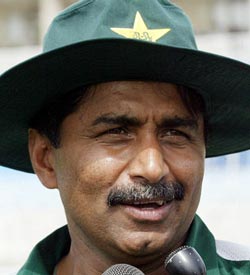
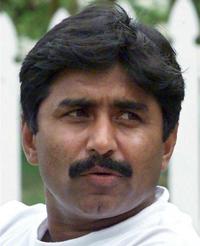
Javed Miandad Biography

Javed Miandad Biography

Javed Miandad Biography Photos Videos Wallpapers 2011
Javed Miandad Biography
Mohammad Javed Miandad Khan (Urdu: محمد جاوید میانداد ) (born June 12, 1957), popularly known as Javed Miandad (Urdu: جاوید میانداد) is a former Pakistani cricketer who played between 1975-1996. After his playing career, he has at various times been a coach, as well as held positions in the Pakistan Cricket Board. He is considered among Pakistan's great batsmen, and among the top few batsmen during his career. He also had three coaching stints with the Pakistan national team, with mixed success and considerable controversy.
Description:
Javed Miandad took the cricket world by storm when he burst onto the international scene in 1976-77. Loud yet contemplative, fiercely defiant, tenacious, and singularly focused on success, he captured the popular imagination like no other Pakistani batsman. For nearly two decades, he dominated the batting scene for his country, compiling one of the game's greatest batting resumes. His feats brought Pakistan into a golden age in its cricketing history when the team started winning overseas and became recognized as one of the best in the world. In the twilight of his career, when many had written him off, Miandad produced a series of crucial batting performances in the 1992 World Cup that eventually saw Pakistan take the title for the first time. He later returned to international cricket as the national coach and guided Pakistan to famous Test victories in India. 
Javed Miandad was Pakistan’s enfant terrible and a batting warrior for Pakistan cricket. He became famous after hitting the winning six on the last ball of the match in the April 1986 match at Sharjah against the Indian bowler Chetan Sharma [ who no doubt was trying to bowl a Yorker , instead let loose with the famous ball type exemplified by the joke "umpire to batsmen taking guard – yes what do you want – batsmen – a full toss on the leg side" ]. This led many a Pakistani calling up their Indian friends on the phone and saying, " This is Miandad speaking ". His other memorable, gritty performances, and there are many, are documented in this delightful book which is a must for every South Asian cricket lover for a rainy day, weekend/ bedtime as well as a serious cricketer’s reading.


Miandad will always be remembered in the annals of Pakistan as not just a street fighting cricketer but a world class batsman and one whose understanding and deep knowledge of the game has led him to become the coach for the present Pakistan team. His current task [not an easy one] is to lead the Pakistani batting line-up out of the woods.


"Cuttting Edge" is his biography written with the help of his friend Dr. Saad Shafqat .For a cricket lover this is a gem of a book, describing how time and again, the Pakistan cricket team has been blessed with raw unknown outsiders who have made their mark in International cricket. From the anecdote of Wasim Akram, who bowled to him in the nets at Karachi in 1984 [ and was so green that he asked Miandad how much money he should take when he got selected for England] , to Miandad’s early childhood days playing street cricket in Ranchore Lines in Karachi [ using the secret weapon of a tennis ball wrapped up in plastic insulating tape to give extra bounce / swing ] and making his first Test hundred [ 163 ] in his first Test appearance in Lahore’s Gaddafi stadium on October 9, 1976 against a pace attack of Hadlee [ which reduced Pakistan to 44 for 3] , this book is Miandad’s way of telling the story of his rise and rise from the humble streets of Karachi to the sophisticated cricket grounds of Lords in London.


Miandad writes endearingly of how his father [a cotton expert and grader at the Karachi Stock Exchange ] and his father’s best friend A.R.Mahmood [ who taught him to play straight bat in the V area between cover and mid-wicket in the early opening of an innings] became the influences of his boyhood cricket days as a batsman, although he would do everything – bowling off-breaks, and wicket keeping in school.


There are 23 Chapters , with a chapter on the "Sharjah" match with India , another one on "Wars with India" , his batting in the World Cup of 1992. There is one entitled " In search of 365 " [ how to get into the bowlers frame of mind and anticipate his next type of ball ] another entitled " Tit for Tat with the West Indies " [ 1987-88 when West Indies and Pakistan were at their peaks –with players such as Lloyd , Richards , Walsh , Ambrose, Marshall . In all these chapters what finally comes through is that Miandad fought for his mark as a world class batsman [ in the league of the top 10 - ]. There are places where Miandad gets stuck on a sticky issue , where he is at pains to show that there was no squabble between him and Imran Khan, but this is contradicted in another chapter called " Picking the gaps " where he rants and raves against the "Oxbridge complex ".


His apologies to Amarnath in the Jaipur match show his character. Many of his words make him come out as a God fearing humble human being. In fact what comes out of this book and this is what Miandad also says is that character is what makes a batsman. Miandad’s praise for other cricketers – especially Gavaskar, his sense of humor and his famous remark to an opposition bowler to provide him with his hotel room number for he wanted to dispatch the ball straight there. Miandad’s opinion on the best batsmen, bowlers are interesting insights into the extreme competition within the sport [ only 8 countries play this game - 4 from south Asia]. These are wonderful joyous words that make one feel the game of cricket is indeed a great game – slightly colonial in its five-day test series - and that South Asians know that and have produced masters such as Miandad.
International Debut: 1975
Batting and fielding records
M Inns NO Runs HS Ave BF SR 100 50 4s 6s Ct St  
Test 124 189 21 8832 280* 52.57 0 - 23 43 - 48 91 1
ODI 233 218 41 7381 119* 41.70 11014 67.01 8 50 - - 71 2


Bowling records
M Inns Balls Runs Wkts BBI BBM Ave Eco SR 4W 5W 10W  
Test 124 36 1470 682 17 3/74 5/94 40.12 2.78 86.47 - - -
ODI 233 12 436 297 7 2/22 2/22 42.43 4.09 62.29 - - -


Career Statistics
Test Debut: Pakistan v New Zealand at Lahore, 09-13, Oct 1976
ODI Debut: Pakistan v West Indies at Birmingham, Jun 11, 1975
 Miandad is among the top cricket players in history. He is also regarded as Pakistan's greatest ever batsman. Javed had played 124 Tests and 233 one day international cricket matches.
His highest score was 280 not out vs India. His fame touched the skies after hitting the winning six on the last ball of the match Sharjah against the Indian bowler.
Mother Tongue
Urudu
Height
Official website
Father
Mother
Brother (s)
Sister (s)
Spouse
Tahira Saigol
Children
Awards


Test
ODI
Matches
124 233
Runs
8,832 7,381
Wickets
17 7
100's
23 8
50's
43 50
Average Run Rate
52.57 41.70
Bowling Average
40.11 42.42
Highest Score
280 117
Best Bowling
3/74 2/22


DesiStore # PBH01027
ISBN 0-19-579918-6
Edition First
Year 2003
Pages 344
Weight (kg) 0.62
Shipping Weight (lbs) 1.57
Pics (color) 24
Pics (b/w) 25
HB/PB Hard Back


Despite his achievements, Miandad never lacked for critics. Always enigmatic, often misunderstood, he was never far from controversy. In this riveting autobiography, written in the same no-nonsense style with which he batted, Javed Miandad finally speaks out. 


From the streets of Karachi to the great Test centres of the world, from schoolboy wonder to batting legend and international hero, from an enthusiastic rookie to the architect of a nation's cricketing fortunes- here is the Miandad story...in his own words.
Miandad made his Test debut against New Zealand at Lahore on October 9, 1976. He scored 163 in this match, to become the youngest player at the time to do so at an age of 19 years and 119 days.[2] In the same series he scored a double century, and on his way broke George Headley's 47 year record, to become the youngest player to achieve the feat.[3] Miandad made his One Day International debut against the West Indies at Edgbaston, Birmingham in the Cricket World Cup1975. Interestingly, his last ODI was also a world cup match, in both innings he was run out and Pakistan lost the match. More, he scored 2 fours and 0 sixes and his strike rate was below 100 in both of his, first and last ODI innings.
Miandad's inclusion in the Pakistan team was itself an achievement. A formidable batting line-up of Majid Khan, Sadiq Muhammad, Zaheer Abbas, Asif Iqbal, Mushtaq Muhammad and Wasim Raja was hard to create any replacements, but Miandad's raw talent made it possible and he become an integral part of Pakistan's strong batting line.
Javed Miandad played 124 Test matches, batting in 189 innings. His aggregate of 8,832 Test runs is a Pakistani record. Even though his test career spanned 17 years, he failed to make it into the top-most category of batsmen with test aggregates of over 10,000 runs.[4] Miandad's 23 centuries and 43 fifties were Pakistani national records, until they were broken by Inzamam-ul-Haq. Miandad's Test career batting average of 52.57 is among the highest for Pakistani batsmen. He scored six double centuries which is the most by a Pakistani and 6th overall.[5] He made his highest score of 280 not out against India.
Javed Miandad is the first (and one of the only two, other being Sachin Tendulkar ) player to have played in six World Cups, the first six, from 1975 to 1996.
javed miandad 
<iframe title="YouTube video player" width="425" height=" 349"src="http://www.youtube.com/embed/JDTj7DvN7X0" frameborder="0" allowfullscreen></


Javed Miandad 
Javed Miandad 
Javed Miandad 
Javed Miandad 
Javed Miandad 
Javed Miandad 
Javed Miandad 
Javed Miandad
   Last Ball Six India vs Pakistan 1986 - Detailed with Interviews   
  Javed Miast ball sixe Javed Miandad r


Wasim Akram Biography


Wasim Akram Biography 


Name Wasim Akram

Nickname(s) Was

Date of birth June 3, 1966

Place of birth Lahore, Punjab, Pakistan

Sun Sign Gemini

Family Wife : Huma, a psychologist

2 sons

Batting Style Left Hand Bat

Bowling Style Left Arm Fast

ODI Debut Pakistan v New Zealand at Faisalabad, 2nd ODI, 1984/85

Test Debut Pakistan v New Zealand at Auckland, 2nd Test, 1984/85

Major Teams Pakistan Automobiles Corporation, Lahore Cricket Association, Lancashire, Pakistan International Airlines, Pakistan.

Other intersting facts *Banned for three months in 1999 – July to September – accused of match-fixing but was reinstated

* Described by West Indies batting great Viv Richards as the most dangerous bowler he has ever faced.

* Became the first bowler to take 500 wickets in World Cup cricket.

* Had a lengthy career with English county side Lancashire by captaining them.

Nickname(s) Was

Date of birth June 3, 1966

Place of birth Lahore, Punjab, Pakistan

Sun Sign Gemini

Family Wife : Huma, a psychologist

2 sons

Batting Style Left Hand Bat

Bowling Style Left Arm Fast

ODI Debut Pakistan v New Zealand at Faisalabad, 2nd ODI, 1984/85

Test Debut Pakistan v New Zealand at Auckland, 2nd Test, 1984/85

Major Teams Pakistan Automobiles Corporation, Lahore Cricket Association, Lancashire, Pakistan International Airlines, Pakistan.

Other intersting facts *Banned for three months in 1999 – July to September – accused of match-fixing but was reinstated

* Described by West Indies batting great Viv Richards as the most dangerous bowler he has ever faced.

* Became the first bowler to take 500 wickets in World Cup cricket.

* Had a lengthy career with English county side Lancashire by captaining them.     


Wasim Akram

Wasim Akram

Wasim Akram

Wasim Akram

Wasim Akram

Wasim Akram

Wasim Akram

                                 Wasim Akram

                                    Wasim Akram                                                                                                                                      

 Best of Wasim Akram (Cricket World Cup 99)  
Wasim Akram : The Greatest bowler of all time. Pakistan